The Forbidden Phrase: How 'I Don't Know' Became Political Suicide in America
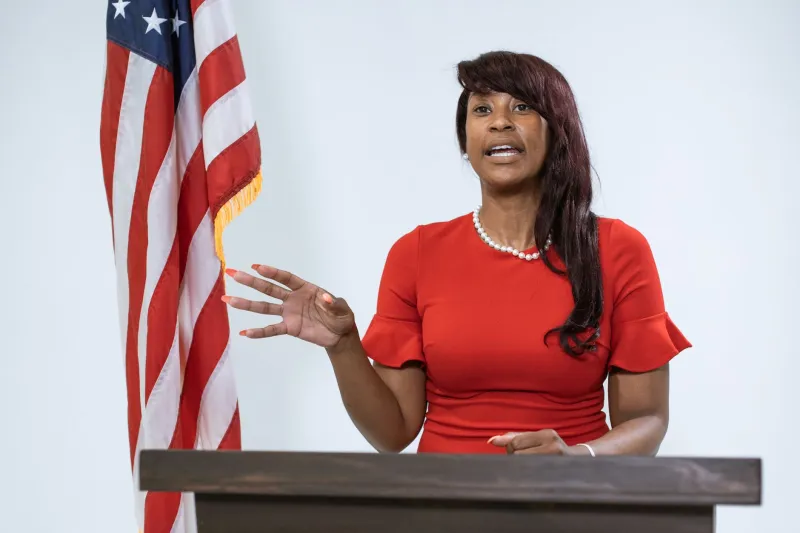
There is a particular kind of silence that descends over a room when a politician pauses before a question and says, with apparent sincerity, that they are not certain of the answer. It is not the silence of respect. It is the silence of damage being assessed.
In contemporary American public life, three words have become more politically dangerous than almost any accusation: I don't know. What was once regarded as the threshold of honest inquiry has been recast as the confession of disqualifying inadequacy. The nation that built its intellectual tradition on the restless questioning of received wisdom now treats visible uncertainty as a character flaw — and the consequences for how Americans think collectively are more serious than most political commentators have been willing to acknowledge.
The Architecture of Performed Certainty
The demand for unbroken confidence did not emerge from nowhere. It was constructed, piece by piece, through decades of media culture that rewarded declarative force over measured analysis. Cable news formats, designed around speed and friction rather than depth, created an environment in which hesitation reads as weakness and qualification reads as evasion. The pundit who says "the situation is genuinely complex" earns far fewer invitations back than the one who delivers a crisp verdict in under thirty seconds.
Social media accelerated this dynamic considerably. Platforms built around immediate reaction and visible engagement metrics created incentive structures that punish nuance at scale. A post that begins with "I've been thinking carefully about this and I'm still not sure" will almost always underperform one that opens with a confident, shareable claim. The architecture of modern attention rewards certainty, regardless of whether that certainty is earned.
What has emerged is a culture of performed expertise — the careful maintenance of a confident surface above a foundation that may be far shakier than it appears. Citizens absorb this performance from their leaders and replicate it in their own conversations, communities, and social media feeds. Admitting that one does not fully understand a piece of legislation, a foreign policy crisis, or an economic trend has become socially costly in ways that admitting ignorance about, say, a celebrity's personal life is not. Public ignorance is tolerated. Public uncertainty about matters of consequence is not.
When Humility Became a Liability
The political weaponization of expressed uncertainty has a well-documented recent history. Candidates who have offered careful, conditional answers to difficult questions have routinely watched those answers clipped, stripped of context, and repackaged as evidence of indecision or intellectual vacancy. The message delivered to the next generation of public figures is unambiguous: never leave an opening. Never say perhaps. Never concede the limits of your knowledge in public.
This norm has migrated well beyond electoral politics. It shapes how experts present themselves in congressional testimony, how public health officials communicate during crises, and how journalists frame their own reporting. The official who acknowledges that early data on a public health emergency is incomplete — as any honest scientist would — faces immediate accusations of incompetence or deception. The lesson is absorbed and repeated: project certainty, regardless of the underlying reality.
The irony is that the very quality being punished — the willingness to acknowledge the boundaries of one's knowledge — is among the most reliable indicators of genuine competence. Research in cognitive psychology has consistently found that individuals who overestimate their own understanding of complex systems are more likely to make consequential errors than those who hold their confidence in proportion to their actual expertise. The Dunning-Kruger effect, now familiar enough to have entered popular vocabulary, describes precisely this inversion: those who know the least often feel the most certain, while those with genuine depth are more likely to appreciate how much remains unknown.
American political culture has, in effect, built a selection mechanism that advantages the former over the latter.
The Collective Cost
The damage is not merely individual. A political culture that systematically suppresses expressed uncertainty degrades its own capacity for collective problem-solving in ways that compound over time.
Effective democratic deliberation depends on citizens and their representatives being willing to update their positions as new information arrives, to acknowledge when prior assumptions have proven incorrect, and to engage with complexity rather than retreat into the comfort of predetermined conclusions. None of these capacities flourish in an environment where changing one's mind is treated as a sign of weakness and where admitting ignorance is treated as an invitation to attack.
Consider the national response to any major policy challenge of recent decades — the 2008 financial crisis, the opioid epidemic, the COVID-19 pandemic, the long-term fiscal trajectory of entitlement programs. In each case, the public discourse was dominated not by careful acknowledgment of genuine uncertainty but by competing performances of confident diagnosis and certain prescription. The experts and officials who were most honest about the limits of available knowledge were frequently drowned out by those who were most willing to project assurance. The results speak for themselves.
This is not simply a failure of individual leaders. It is a structural failure — a reflection of what the prevailing narrative about strength and knowledge demands from anyone who seeks or holds public trust.
Reimagining Confidence as a Public Value
The question worth sitting with is not whether American culture will ever fully embrace uncertainty — cultures rarely make such clean reversals. The more tractable question is whether it is possible to construct a different narrative about what intellectual confidence actually looks like.
Genuine confidence, in the tradition of the nation's best scientific and democratic thinking, has never meant the absence of doubt. It has meant the courage to engage seriously with difficult questions while being honest about the state of one's knowledge. The scientist who says "our current models suggest X, but there is meaningful uncertainty in these projections" is not displaying weakness. They are displaying the foundational discipline of honest inquiry.
The same standard could, in principle, be applied to political leadership. A representative who says "I've studied this bill carefully and I have concerns about provisions I don't yet fully understand" is not demonstrating incompetence. They are demonstrating exactly the kind of deliberative seriousness that representative government was designed to produce.
Rebuilding a public appetite for that kind of honesty would require a shift not only in how politicians present themselves, but in how media rewards and punishes different modes of public expression, and in how citizens have been trained to read hesitation. It would require, in short, a different story about what it means to be a credible voice in American public life.
The Nation We Imagine Ourselves to Be
Public Imagine Nation exists, in part, to examine the distance between the America that is narrated and the America that actually functions. On the question of certainty and knowledge, that distance is considerable.
The national self-image includes a deep reverence for pragmatism, for evidence-based thinking, for the kind of restless intellectual curiosity that built great universities, sent missions to the moon, and produced frameworks of governance that the world spent two centuries studying. That tradition did not flourish by punishing doubt. It flourished by taking doubt seriously — by treating "I don't know yet" not as an ending but as the only honest beginning.
Recovering that tradition, or at least creating more space for it in public life, may be among the quieter but more consequential challenges facing American democracy. The confidence trap does not announce itself with drama. It simply makes honest thought a little more costly, year after year, until the habit of honesty becomes genuinely rare.