Grief as a Growth Market: The Commodification of American Compassion
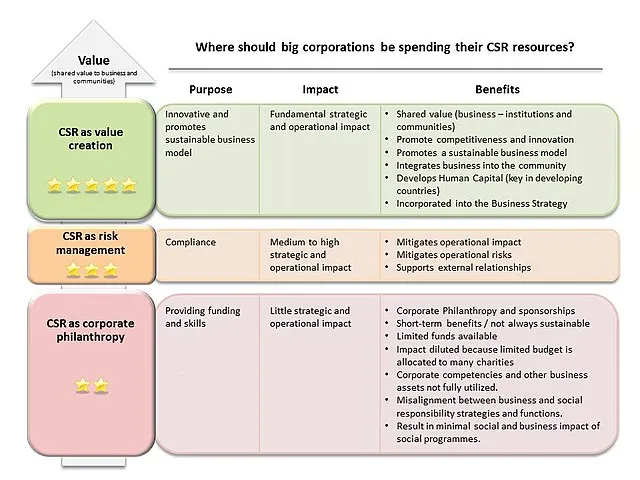
Photo: Unknown authorUnknown author, CC BY-SA 4.0, via Wikimedia Commons
Somewhere between the genuine moral impulse to acknowledge suffering and the institutional need to appear responsive to it, American public life developed a remarkable infrastructure. Call it the architecture of performed feeling: a set of rituals, aesthetics, and rhetorical conventions through which corporations, political figures, and media organizations signal emotional alignment with social pain—and, in doing so, convert that alignment into brand equity, electoral advantage, or audience loyalty.
The question worth sitting with is not whether the individuals participating in these rituals are sincere. Some are; many are not; most exist in the complicated middle ground where genuine feeling and strategic calculation are genuinely difficult to separate. The more pressing question is structural: what does a society lose when compassion becomes a commodity, and when the performance of empathy substitutes for the slower, less visible work of addressing the conditions that generate suffering in the first place?
The Anatomy of the Empathy Cycle
The pattern is consistent enough to be mapped. A moment of visible social pain—a high-profile incident of racial violence, a mass shooting, an economic catastrophe affecting a particular community—enters the national media bloodstream. Within hours, the response infrastructure activates. Corporate social media accounts post carefully worded statements of solidarity. Political figures appear before cameras with expressions calibrated to convey gravity. Hashtags proliferate. Profile pictures acquire symbolic overlays.
Each of these gestures carries real costs—reputational risk, potential customer alienation, the labor of drafting and approving communications—and each is undertaken in the expectation of returns. For corporations, the return is brand differentiation and the cultivation of consumer loyalty among demographics that reward visible values alignment. For politicians, it is the activation of base enthusiasm and the cultivation of an image as a leader who 'cares.' For media organizations, it is the engagement metrics that accompany emotionally resonant content.
What is notable about this cycle is not that it exists—human beings have always used expressions of sympathy to build social bonds and establish status—but that it has been industrialized. The empathy response is now a managed process, complete with communications teams, crisis PR protocols, and post-incident brand analysis. Grief, in the contemporary American attention economy, is a content vertical.
Visibility Without Velocity
Advocates for marginalized communities have long observed that the relationship between representation and material progress is more complicated than it appears. The years following 2020's wave of corporate solidarity statements on racial justice offer a particularly instructive case study. Hundreds of major American companies issued public commitments to anti-racist principles, pledged significant sums to equity initiatives, and diversified their advertising imagery. Simultaneously, many of those same companies continued practices—in hiring, lending, contracting, and wage structure—that reproduced the inequalities their statements deplored.
This is not necessarily hypocrisy in the crude sense. It is something more systemic: the substitution of communicative action for structural action. When a company releases a statement affirming that Black lives matter, it has done something real—it has taken a public position, incurred some reputational risk, and contributed to a shift in the perceived norms of corporate communication. But it has not changed a hiring algorithm, restructured a supply chain, or altered the composition of its board. The statement exists in the realm of narrative; the inequality exists in the realm of material fact. These are different realms, and movement in one does not automatically produce movement in the other.
Politics operates by a similar logic. A politician who appears at a community vigil, who speaks movingly about the pain of those affected by a policy failure, who frames their campaign around the suffering of ordinary Americans—that politician has done something. They have created a narrative of alignment. But narrative alignment is not the same as policy alignment, and the emotional resonance of a campaign appearance does not guarantee that the legislative work of addressing the underlying issue will follow.
The Perception of Progress
There is a more troubling dimension to this dynamic, one that goes beyond simple hypocrisy or strategic calculation. When empathy becomes sufficiently visible and widespread, it can generate the subjective experience of progress in the absence of objective progress. If enough prominent voices acknowledge a problem with sufficient emotional intensity, the cultural atmosphere around that problem can shift in ways that feel meaningful—and that may, in fact, reduce the pressure to address the problem structurally.
This is the subtlest function of the empathy industrial complex: not the deliberate suppression of reform, but the inadvertent displacement of urgency. A community whose suffering has been widely acknowledged, whose stories have been told in documentary films and political speeches and corporate campaigns, may find that the acknowledgment itself has consumed much of the political energy that might otherwise have been directed toward change. The narrative of recognition becomes a substitute for the politics of remedy.
American history offers numerous examples of this substitution. The decades following the Civil Rights Movement saw the aesthetic integration of Black Americans into mainstream cultural representation—in advertising, entertainment, and political imagery—while economic and residential segregation remained largely intact. The story that America told about itself changed considerably; the material conditions of millions of Americans changed considerably less.
Toward a More Demanding Compassion
None of this is an argument for a politics stripped of emotional content or a culture that responds to suffering with studied indifference. Empathy is not the problem; the problem is empathy that has been carefully designed to terminate at the point of acknowledgment, before it can generate the discomfort necessary to produce change.
A more honest public imagination would hold two things simultaneously: the genuine value of visibility and acknowledgment, and the recognition that visibility is a beginning rather than an end. It would apply scrutiny not only to those who refuse to acknowledge suffering but to those whose acknowledgment is suspiciously convenient, suspiciously well-produced, and suspiciously free of any commitment to the structural changes that would make future acknowledgment unnecessary.
The American story has always been partly a story about who gets to be seen and whose pain is recognized as real. That story matters. But the telling of it cannot be allowed to substitute for the harder, less photogenic work of rewriting the conditions that make it necessary to tell.