Straight Talk, Shallow Governance: The Illusion of the Unfiltered Leader
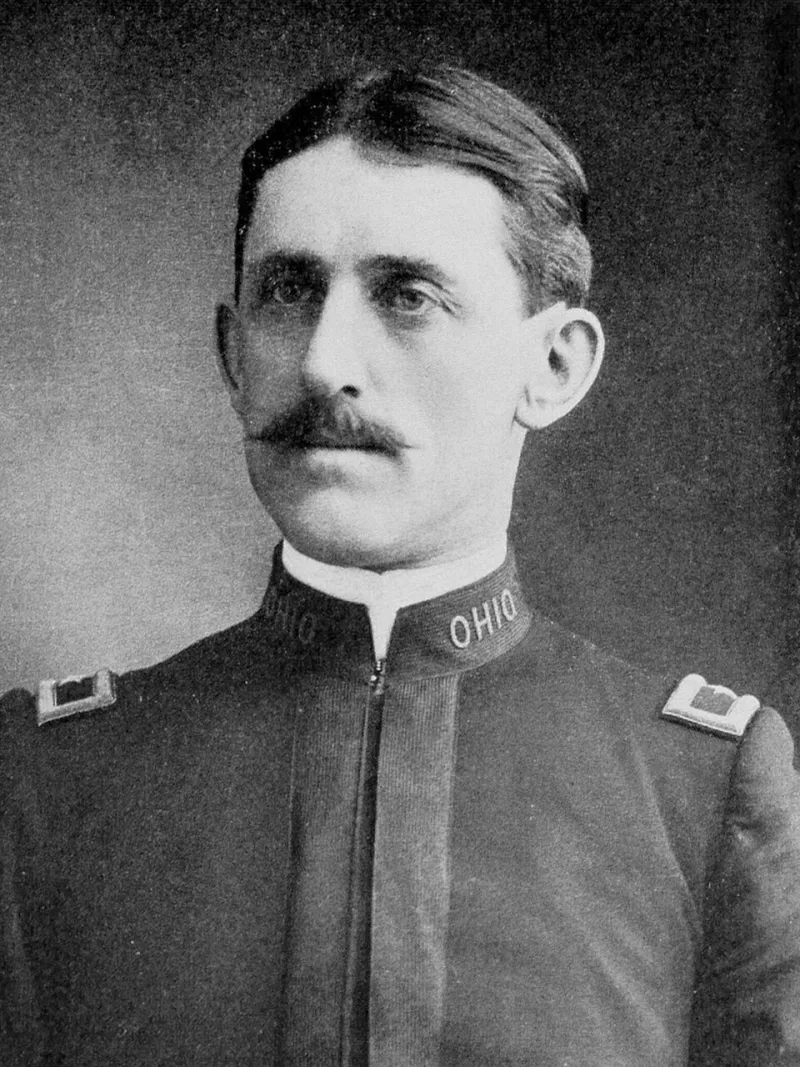
Photo: Baker's Art Gallery, Public domain, via Wikimedia Commons
There is a particular moment in American political life that has become almost ritualistic. A candidate stands before a crowd, dispenses with the usual diplomatic hedging, and says something that breaks the unwritten rules of polite public discourse. The crowd erupts. Commentators declare the moment 'authentic.' Polling numbers shift. And somewhere in the gap between that applause and the eventual business of governing, something important gets lost.
The cultural valorization of 'realness' in American public life is not new. Andrew Jackson built a political identity around frontier bluntness. Harry Truman's plain-spoken directness became the stuff of legend. But what has changed in the contemporary era is the degree to which candor has been fully decoupled from competence—treated not as a supplement to governing skill, but as a substitute for it.
The Psychology of the Unfiltered Moment
To understand why this happens, it helps to examine the psychological mechanics at work. Researchers in political cognition have long noted that voters rarely evaluate candidates through the kind of deliberate, policy-by-policy analysis that civics textbooks describe. Instead, they rely on heuristics—mental shortcuts that allow rapid judgments based on limited information. Perceived authenticity is among the most powerful of these shortcuts.
When a political figure violates a social norm—interrupting a moderator, dismissing an opponent with open contempt, refusing to offer the usual diplomatic qualifications—something curious happens in the observer's mind. The norm violation reads as evidence of honesty. The reasoning, largely unconscious, goes something like this: a person who is hiding something, or who is fundamentally dishonest, would be careful. They would perform propriety. Therefore, someone who is not performing propriety must have nothing to hide.
This is a seductive but logically fragile inference. Norm violation and truthfulness are not the same thing. Neither are norm violation and competence. A surgeon who swears freely in the operating room is not necessarily more skilled than one who does not. A contractor who tells you bluntly that your kitchen renovation will be expensive is not necessarily more capable of completing it on time and within budget. Yet in the specific theater of American politics, the leap from candor to capability has become almost automatic.
Authenticity as a Manufactured Product
What makes this dynamic particularly interesting—and particularly troubling—is that 'authenticity' in politics is rarely as spontaneous as it appears. The unfiltered moment is frequently the product of considerable calculation. Political consultants and media strategists have spent decades studying which kinds of norm violations register as refreshing rather than disqualifying. The language of plain-spoken directness has been packaged, tested, and deployed with the same precision as any other campaign message.
This means that what voters experience as the absence of performance is, in many cases, a highly refined performance of non-performance. The candidate who 'tells it like it is' has usually been carefully coached on exactly which truths to tell, and how loudly. The result is a strange hall of mirrors in which the appearance of authenticity becomes the most strategically valuable form of inauthenticity.
American media ecosystems have amplified this dynamic considerably. Cable news and social media platforms reward the memorable, the provocative, and the emotionally charged. A carefully reasoned explanation of infrastructure financing generates little engagement. A contemptuous dismissal of political opponents generates enormous engagement. Over time, this incentive structure trains both politicians and audiences to treat the latter as the more serious and credible mode of communication.
The Governance Gap
The practical consequences of this perception shift are visible in the distance between electoral promise and administrative reality. Leaders who win on platforms of blunt disruption frequently discover that governance requires precisely the qualities their campaigns were built around rejecting: patience, coalition-building, technical expertise, and the willingness to communicate in the qualified, hedged language of institutional complexity.
The voter who thrilled to a candidate's willingness to say the unsayable often finds, some months into an administration, that saying the unsayable does not automatically translate into doing the undoable. Policy implementation is unglamorous. It involves interagency coordination, legislative compromise, regulatory procedure, and the slow accumulation of incremental progress. None of these things are particularly compatible with the aesthetics of unfiltered candor.
This creates a feedback loop that is difficult to exit. When governance proves complicated and slow—as it invariably does—the politician who built their brand on directness has few tools available except to escalate the rhetoric. The enemy becomes not the complexity of the problem but the corruption or cowardice of those who resist the simple solution. Authenticity curdles into grievance, and grievance becomes its own governing philosophy.
Recalibrating the Public Imagination
None of this is an argument for the kind of bloodless technocratic communication that has also, in its own way, failed to earn public trust. There is a legitimate critique of political language that is so thoroughly hedged, so carefully managed, so relentlessly on-message, that it communicates nothing of substance and inspires no one. The public appetite for directness did not emerge from nowhere; it emerged from decades of political speech designed to avoid meaning anything.
But the corrective to empty polish is not the embrace of productive rudeness. It is the recovery of something harder to perform and harder to fake: the communication of genuine understanding. A leader who demonstrates that they have grappled seriously with the complexity of a problem—and can explain it clearly, without condescension—is exhibiting a form of respect for the public that neither polished evasion nor theatrical bluntness can replicate.
The challenge for American political culture is to rebuild the imaginative capacity to distinguish between a leader who makes us feel understood and a leader who actually understands. These are not the same thing, and the distance between them is precisely where the authenticity trap closes its jaws.
What we choose to call 'real' in our public figures says a great deal about what we have decided to stop demanding from them. That is a conversation worth having—plainly, and with the full complexity it deserves.