The Witness and the Witnessed: How Americans Lost the Ability to Simply Live
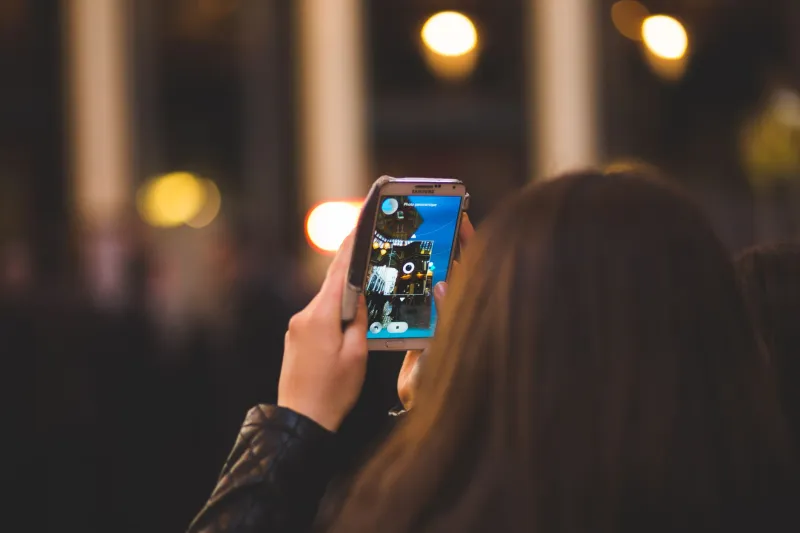
There is a particular moment that has become quietly ubiquitous in American public life. A person stands at the edge of something beautiful — a canyon, a concert, a child's first steps — and rather than absorbing the experience, they reach for a phone. The gesture is reflexive now, barely conscious. The documentation precedes the feeling, or perhaps replaces it entirely. What is being preserved, exactly? And for whom?
These are not trivial questions. They sit at the intersection of technology, identity, and the peculiar American appetite for self-narration. The United States has always been a nation that told stories about itself, constructing civic mythology with the same industriousness it applied to railroads and skyscrapers. But something qualitatively different has emerged in the past two decades — a condition in which ordinary citizens have internalized the logic of public relations, applying it not to institutions or products, but to the raw material of their own daily existence.
The Audience That Was Always There
Social media did not invent self-consciousness. What it accomplished was far more consequential: it made the imagined audience permanent. Prior to the era of continuous digital broadcasting, most Americans moved through their days without a tangible mechanism for converting experience into public content. Introspection was, by default, a private act. The diary stayed in the drawer.
Now the drawer is open, and it faces outward. Platforms engineered around engagement metrics have trained hundreds of millions of people to evaluate their experiences not simply as they occur, but in terms of how they might be received. The hike becomes a post. The meal becomes a photograph. The political opinion becomes a thread. Each of these translations involves a subtle but significant distortion — a reframing of the personal into the presentable.
Psychologists have a term for the internal observer that many people carry: the self-monitoring function. What social media has done is externalize and amplify that function to an unprecedented degree, effectively installing a permanent editorial sensibility into the stream of lived experience. Americans are not merely living; they are, simultaneously, producing.
Authenticity as the New Performance
The cultural response to this condition has been, characteristically, to commodify its antidote. "Authenticity" has become one of the most commercially and politically potent words in the American lexicon. Brands pursue it. Politicians perform it. Influencers build entire careers on its simulation. The irony is almost too neat: the hunger for the genuine has itself become a genre, complete with its own conventions, aesthetics, and market logic.
The unfiltered selfie is carefully lit. The raw emotional confession is posted at peak engagement hours. The candid moment is captured on the third take. None of this is cynicism, exactly — most participants are not conscious fraudsters. They have simply absorbed the grammar of a media environment that rewards legibility over complexity, relatability over truth. The performance of authenticity is not a lie told to others so much as a habit of mind that gradually colonizes the relationship one has with oneself.
This dynamic carries particular weight in American political culture, where the authentic outsider has become a recurring archetype of considerable electoral power. Voters exhausted by perceived artifice find themselves drawn to figures who present as unvarnished and unscripted — rarely pausing to consider that the performance of non-performance is still a performance. The appetite for the real has made Americans, paradoxically, more susceptible to sophisticated simulation.
A Democracy of Curated Selves
The political implications extend well beyond the theater of elections. Democratic culture depends, at some foundational level, on citizens who possess a relatively stable sense of their own values, interests, and convictions — people capable of deliberating not merely as performers seeking approval, but as individuals with genuine stakes in collective outcomes.
When the self becomes primarily a narrative product, subject to continuous revision based on audience feedback, that stability erodes. The person who has spent years optimizing their public identity for engagement may find, when confronted with a genuinely difficult civic question, that they no longer know what they actually think. They know what kind of person they have presented themselves as. They know what their particular community expects. But the unmediated interior voice — the one that speaks before the editorial function kicks in — has grown faint from disuse.
This is not a problem confined to any single political tribe. The progressive activist photographing their protest sign and the conservative patriarch filming a patriotic monologue for his followers are engaged in structurally identical acts. Both have learned to experience their convictions partly as content. Both are, in a meaningful sense, performing their own citizenship.
What Gets Lost in the Broadcast
There are things that resist documentation — not because they are hidden, but because the act of capturing them destroys what makes them valuable. Grief, properly felt, does not pause for framing. Genuine uncertainty cannot be rendered as a brand voice. The slow, unglamorous work of changing one's mind rarely produces shareable content.
These are precisely the interior experiences that democratic life most requires. A citizenry capable of sitting with ambiguity, of tolerating the discomfort of unresolved questions, of revising its understanding without the pressure of an audience — this is not a romantic ideal but a functional prerequisite for self-governance. When the broadcast imperative crowds out those quieter processes, what diminishes is not merely individual wellbeing but the collective capacity for honest public reasoning.
The great American tradition of self-invention has always carried within it a tension between liberation and fabrication. The ability to reinvent oneself — to author a new identity, to escape the constraints of origin — is foundational to the national mythology. Social media has democratized that tradition while simultaneously hollowing it out, offering everyone the tools of self-construction while quietly replacing the self with the brand.
Reclaiming the Unlived Moment
None of this is to suggest that documentation is inherently corrupting, or that the impulse to share experience is something to be ashamed of. Human beings have always sought to externalize their inner lives — through language, art, ritual, and story. The desire to be witnessed is not a pathology.
But witness requires a prior reality to observe. The photograph assumes something worth photographing. The story assumes a life that exists before the telling. When the sequence inverts — when the story precedes the experience, when the frame arrives before the feeling — something essential is foreclosed.
The question worth sitting with, in a nation that has always been as much imagination as fact, is whether Americans can recover a relationship with their own unbroadcast interiority. Whether they can locate, beneath the layered performances of curated selfhood, something that does not require an audience to be real. The answer to that question matters not only for individual psychology but for the health of a democracy that ultimately depends on citizens who know the difference between what they believe and what they have decided to say.