Witnessed to Death: How the Hunger for Authenticity Consumed the Self It Promised to Free
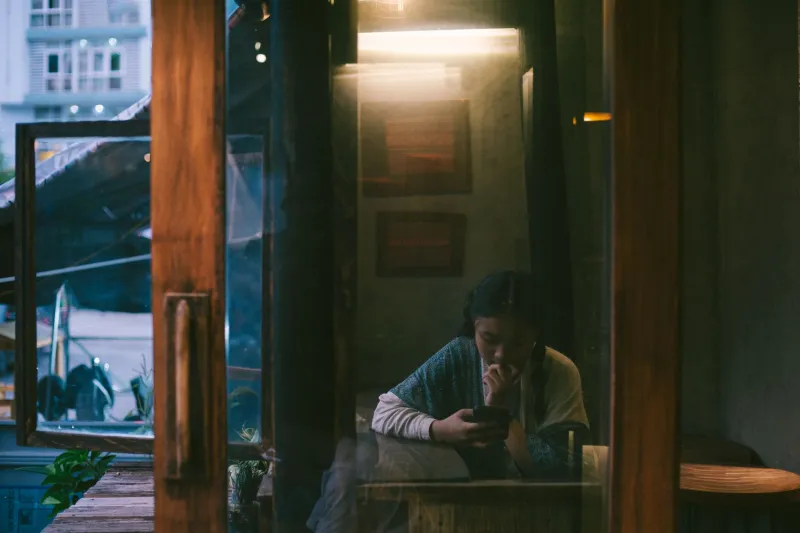
There is a particular kind of exhaustion that has settled over American life — not the exhaustion of labor or hardship, but of perpetual self-presentation. It is the fatigue of a person who has spent so long narrating their own existence that they can no longer quite locate where the narration ends and the existence begins. This is not a private crisis. It is a cultural condition, and it has profound implications for how Americans understand identity, community, and, ultimately, democratic life itself.
The word authentic has become one of the most overworked terms in the American lexicon. Politicians invoke it. Brands sell it. Therapists prescribe it. Social media platforms are engineered, at least ostensibly, to deliver it. And yet the more urgently authenticity is demanded, the more elusive it becomes — because the very act of performing one's realness for an audience transforms that realness into something else entirely.
The Paradox at the Center
Authenticity, in its classical sense, referred to something unconstructed — experience prior to its packaging, emotion prior to its editing. What American culture has produced instead is a sophisticated grammar of performed sincerity. The carefully lit photograph of a difficult morning. The social media caption that signals rawness through strategic imperfection. The public confession that arrives pre-shaped, with a narrative arc and a redemptive conclusion already attached.
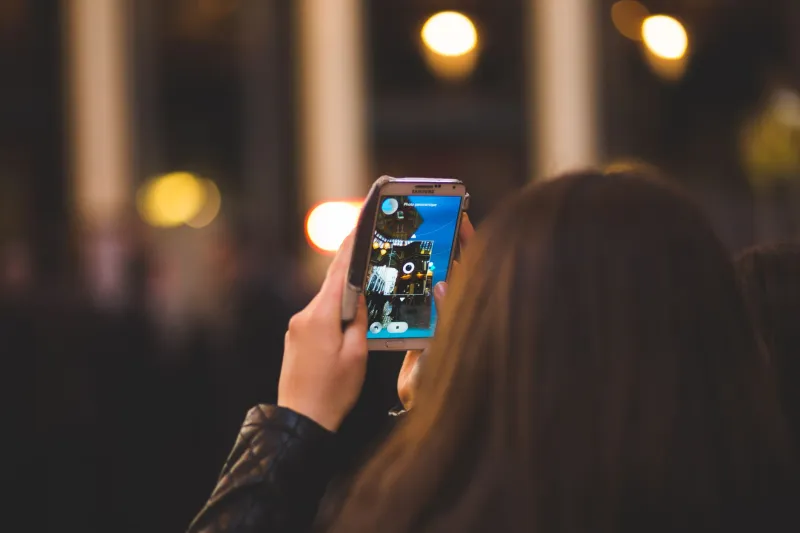
None of this is dishonesty in any simple sense. People genuinely feel the things they document. The problem is architectural: when the documentation becomes the primary event, experience is no longer the source material — it is the byproduct. We live in order to have something worth sharing. We suffer in order to eventually narrate the suffering. The inner life becomes a content pipeline.
Psychologists have a term for the phenomenon in which observing a behavior changes the behavior itself: the observer effect. American culture has industrialized this effect and applied it to selfhood. The observer is now always present, internalized, watching — and the self being observed has reorganized itself accordingly.
Who Profits from the Performance
It would be a mistake to treat this development as purely organic, the spontaneous expression of a generation raised on screens. The architecture of authenticity-as-performance was deliberately constructed, and it serves identifiable interests.
Social media platforms are, at their structural core, attention-extraction machines. They do not merely reward self-expression; they reward self-expression optimized for engagement. Vulnerability performs well. Confession drives clicks. The algorithm does not distinguish between genuine disclosure and its simulation — it responds only to the metrics of reaction. Over time, users learn, consciously or otherwise, to calibrate their inner lives toward what the system rewards.
Beyond the platforms, an entire industry of personal branding, lifestyle content, and therapeutic self-narration has grown up around the premise that the examined life is not merely worth living — it is worth monetizing. Influencers sell their morning routines. Coaches sell frameworks for "showing up authentically." The result is a marketplace in which selfhood itself has become a product category, and authenticity its primary quality signal.
This commodification does not leave politics untouched. The authentic politician — unscripted, emotionally legible, apparently unmediated — has become a dominant archetype precisely because voters have been trained to read performance fluency as a form of trustworthiness. The trouble is that skilled performers are not the same as honest ones, and a culture that has lost the ability to distinguish lived experience from its convincing imitation is poorly equipped to make that distinction at the ballot box.
The Audience That Never Leaves
Perhaps the most consequential effect of the authenticity economy is what it has done to solitude. To be alone, in the traditional sense, is to be temporarily free of the evaluating gaze — to think, feel, and act without reference to how those thoughts, feelings, and actions will be received. That freedom is not merely pleasant; it is, many psychologists argue, essential to the formation of a stable self.
But the internalized audience does not clock out when the phone is put down. Americans who have spent years in the attention economy carry that audience with them into moments that were once private. They frame the sunset before they see it. They compose the caption before they feel the feeling. The reflexive narration runs continuously, a low hum beneath experience, translating lived moments into shareable ones before they have had time to simply be lived.
This is not a generational quirk. It is a structural feature of a culture that has made visibility a proxy for value. When existence must be witnessed to matter, the unwitnessed life begins to feel, at some subliminal level, like a life wasted.
What the Nation Imagines About Itself
The implications extend well beyond individual psychology. A democracy depends, at minimum, on citizens capable of forming genuine convictions — views that emerge from reflection rather than performance, that can survive the absence of applause. It depends on people who can sit with uncertainty, complexity, and the discomfort of positions that do not translate easily into shareable content.
The authenticity trap undermines precisely these capacities. When identity is a perpetual audition, conviction becomes another costume. Political beliefs are selected not only for their content but for their legibility to an imagined audience — their capacity to signal tribal membership, moral seriousness, or cultural sophistication. The inner life is crowded out by its own projection.
America has always been a nation that tells stories about itself. The national imagination — that collective, contested space in which the country works out what it is and what it aspires to be — is not a weakness but a resource. The problem arises when the story-telling apparatus colonizes the very experiences from which authentic stories are made. When the narrative imperative precedes the life rather than following from it, the nation's self-understanding becomes increasingly untethered from anything it has actually lived.
Toward a Less Witnessed Life
There is no clean prescription for this condition, no program of digital detox or mindfulness practice that resolves what is, at root, a cultural and structural problem. But diagnosis is not nothing. Naming the trap is a precondition for stepping around it.
What might it mean to resist the authenticity performance — not by retreating into secrecy, but by recovering a tolerance for the unwitnessed moment? To allow experience to be complete before it is narrated? To form a political opinion before considering how it will be received? These are not romantic gestures toward some pre-digital pastoral. They are, in a modest but meaningful way, acts of civic repair.
A public imagination capable of genuine empathy, genuine deliberation, and genuine surprise requires selves that have not been entirely consumed by their own presentation. The most radical thing Americans might do, in this cultural moment, is to occasionally live without an audience — and to trust that what happens there is real, and consequential, and worth protecting from the feed.